Tobias Rawet

  1. Home
  2. Digital Exhibitions
  3. Get to know Elisabeth and Tobias
  4. Get to know Elisabeth and Tobias - Tobias Rawet
Tobias Rawet was born on February 12, 1936 in Łódź, Poland. In 1939, Poland was occupied by Nazi Germany. The Nazis created ghettos in most major cities where all Jews were forced to move. Since Tobias and his family were Jewish, they were forced into the Łódź ghetto.
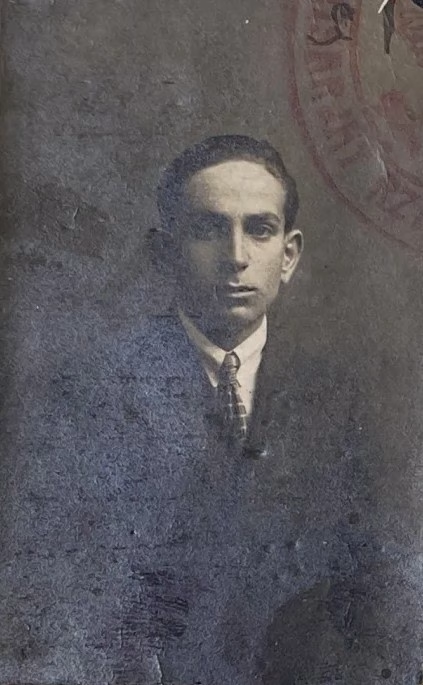
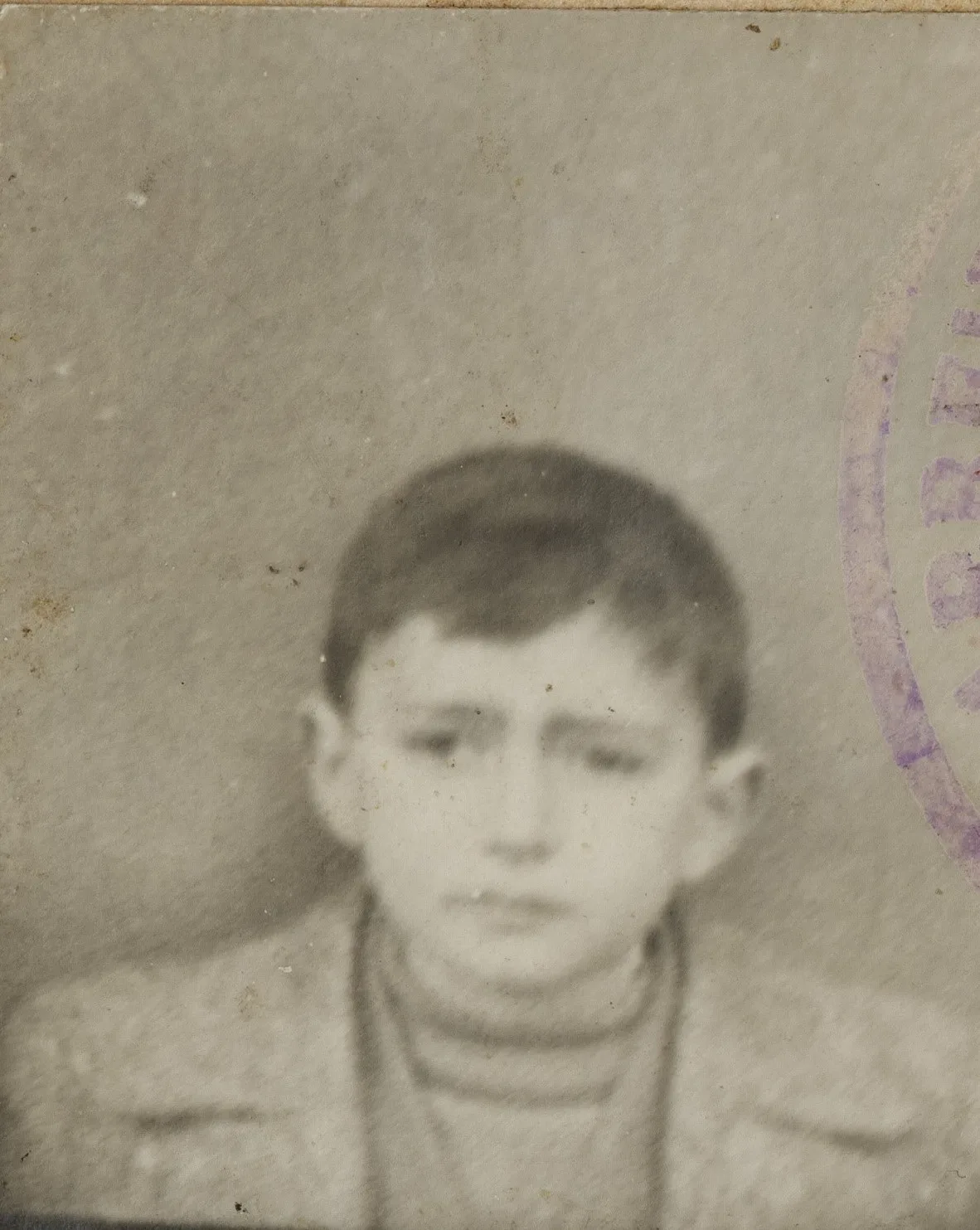
Photograph of Tobias from his ID-document. Ola Myrin, the Swedish Holocaust Museum/SHM.

Łódź ghetto

The old and worn-out quarter was filled with tens of thousands of Jews from all over Europe. Food was scarce and diseaseses spread in the crowded houses. Executions took place openly in the streets. Łódź industries were the lifeblood of the ghetto and most of the ghettos population was forced to work in the factories. Only those who worked or went to school were allowed to take part in the ghetto's food rations. Since Tobias was only 6 years old when they were forced in the ghetto, his father arranged for false documents that made him 4 years older, so Tobias could work.
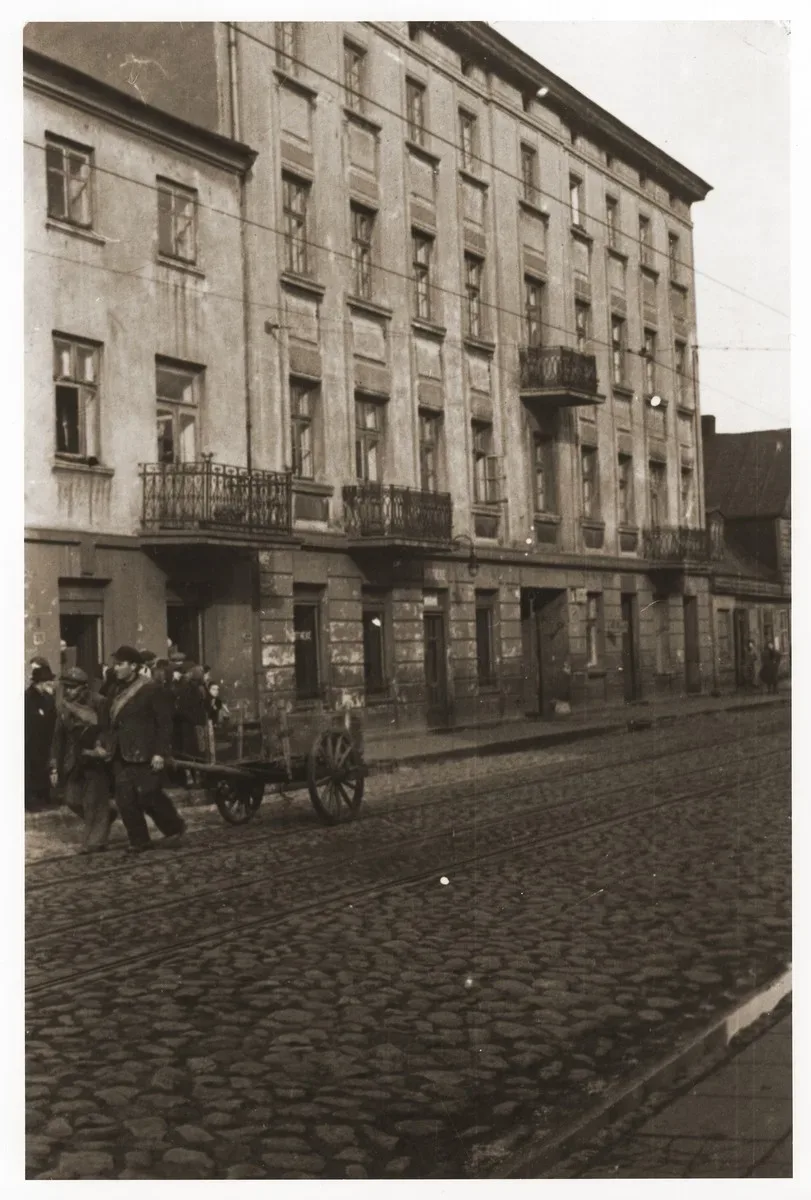
Photo of two men pulling a cart in the Łódź Ghetto. United States Holocaust Memorial Museum, courtesy of Muzeum Sztuki w Lodzi. Public Domain.

Ghetto

In August 1939, Nazi Germany and the Soviet Union agreed to divide Poland between them. Nazi Germany invaded Poland on September 1. Two days later, France and Britain declared war on Nazi Germany. On September 17, the Soviet army entered eastern Poland, in areas that are now Ukraine and Belarus. By early October, Poland was defeated.

There were about 3.3 million Jews in Poland in 1939. When World War II ended, only about 380,000 Polish Jews were still alive. In addition to the Polish Jews, about 2 million Polish citizens were murdered by the Nazis, among them political opponents and Polish intellectuals.

After the occupation of Poland, the Nazis began to create so-called ghettos in Polish cities. They forced Jews to live in small, restricted areas of the cities. Over time, most of these ghettos were fenced off and closed, Jews were no longer allowed to leave the ghetto without permission. In some of the ghettos, for example in the Warsaw ghetto, there were also groups of Sinti and Roma.

The people in the ghetto were forced to work in the ghetto's factories, both for private companies and for the German war industry. Overcrowding, disease and starvation were part of everyday life and the mortality rate was extremely high. From the spring of 1942, many ghettos also served asassembly points for the Nazis to deport Jews and Roma to extermination camps.

The Mother's Day letter

In the ghetto, Tobias worked in a factory, he saved his money to buy a Mother's Day card. When Tobias was 8 years old, he gave his mother Estera the card, witch he bought with his saved money. The card was printed in the ghetto and gives a picture of life there.
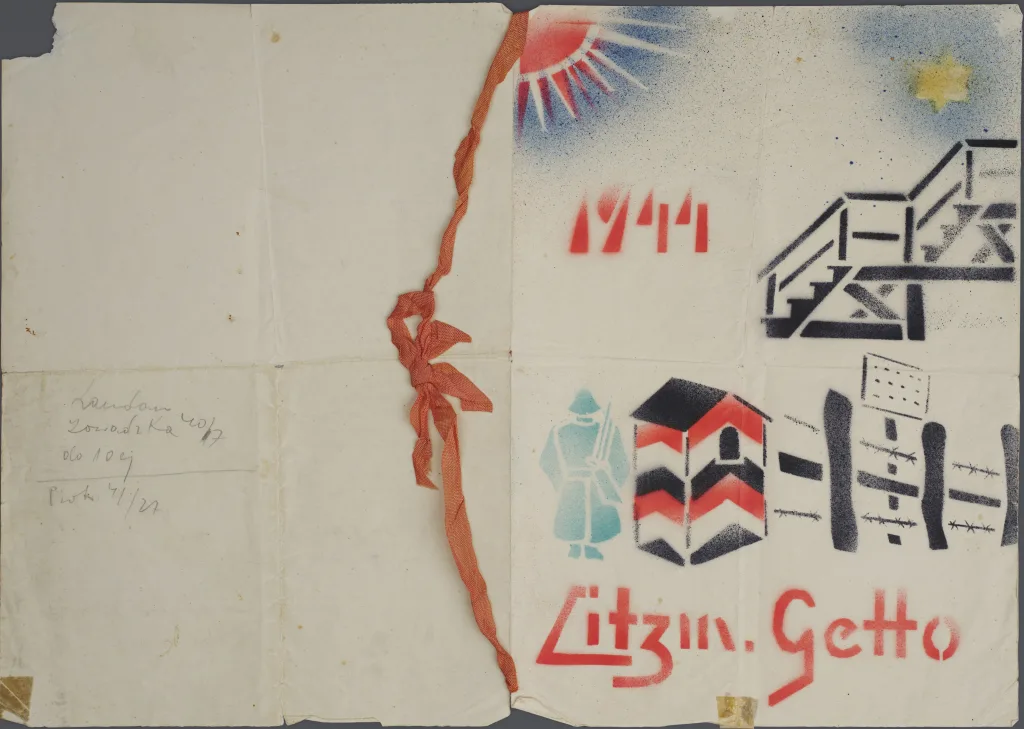
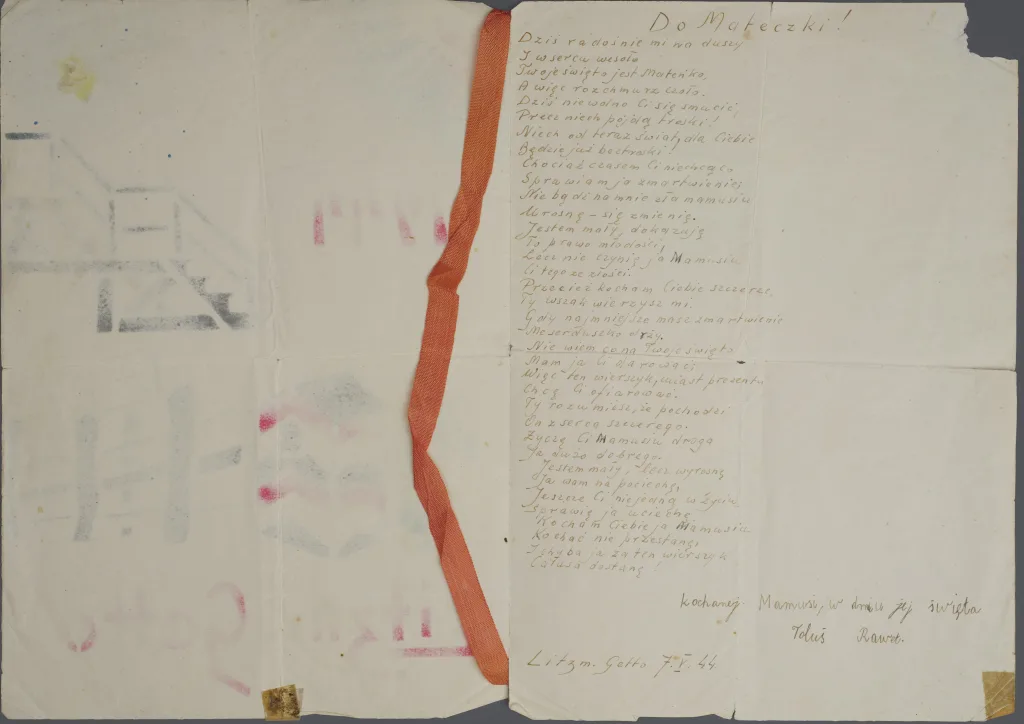
Front and back of the Mother's Day letter. The card depicts the Lodz ghetto. Ola Myrin, Swedish Holocaust Museum/SHM.
Inside of the Mother's Day letter with a poem in Polish. Ola Myrin, Swedish Holocaust Museum/SHM.

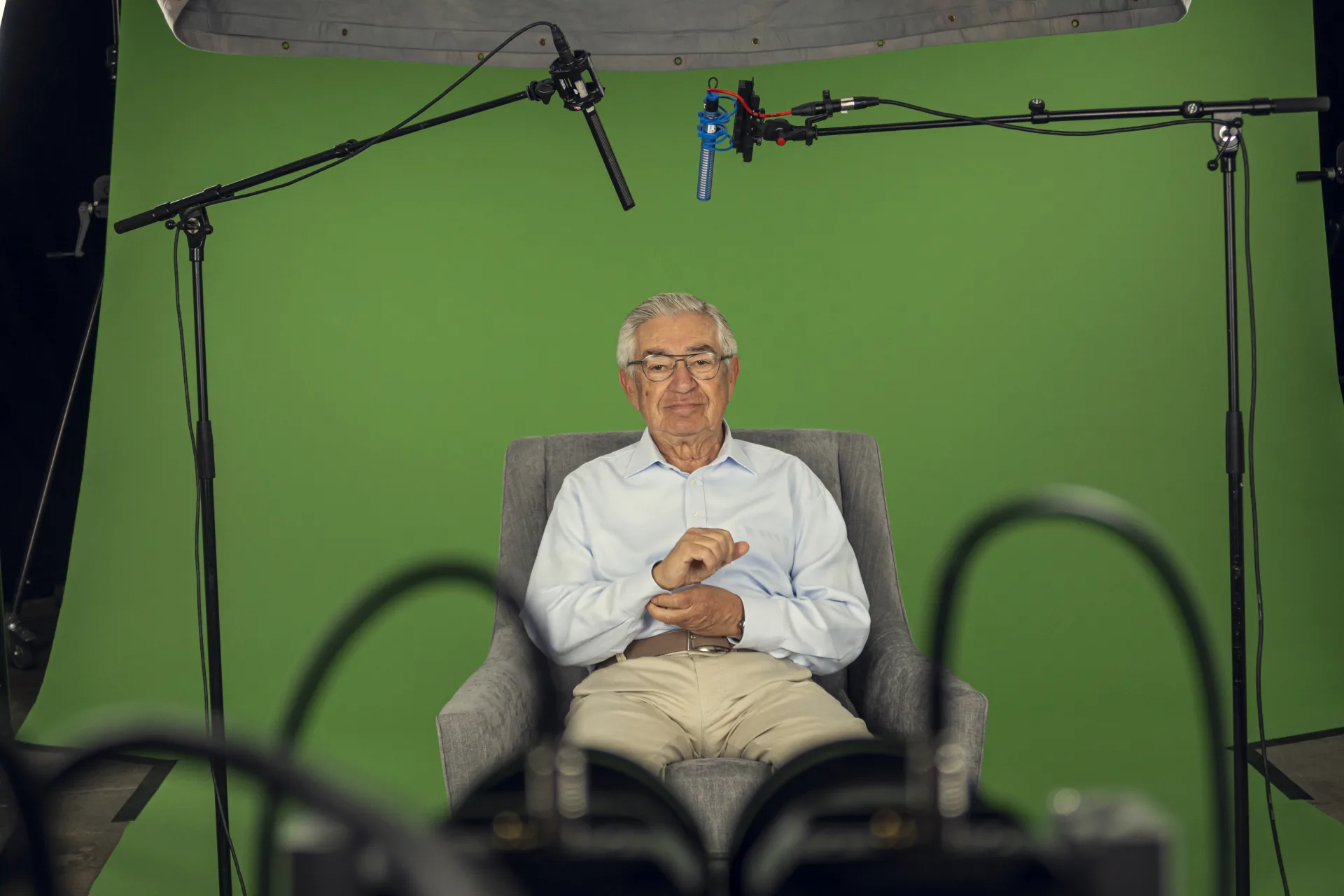
Tobias Rawet himself tells the story of the Mother's Day letter.

Deportations

In January 1942, deportations began from the Łódź ghetto to the Chełmno extermination camp. The Nazis emptied and closed the ghetto in 1944. Tobias and his family were among the last ones to leave the ghetto. The prisoners were transferred to various extermination, labor and concentration camps. Tobias and his mother were taken by train to the Ravensbrück concentration camp.
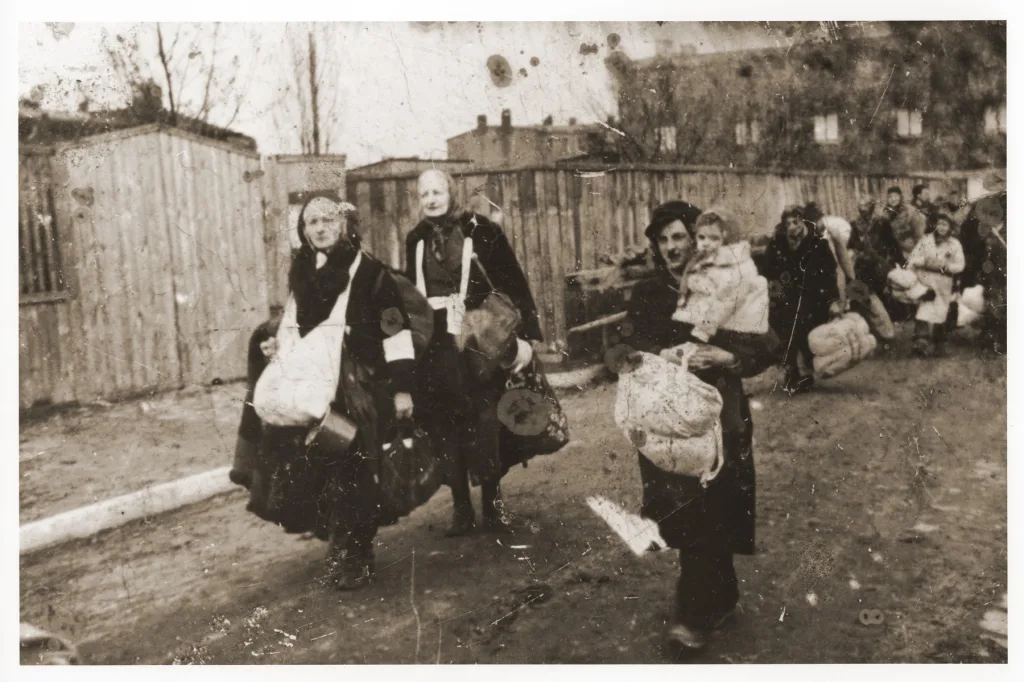
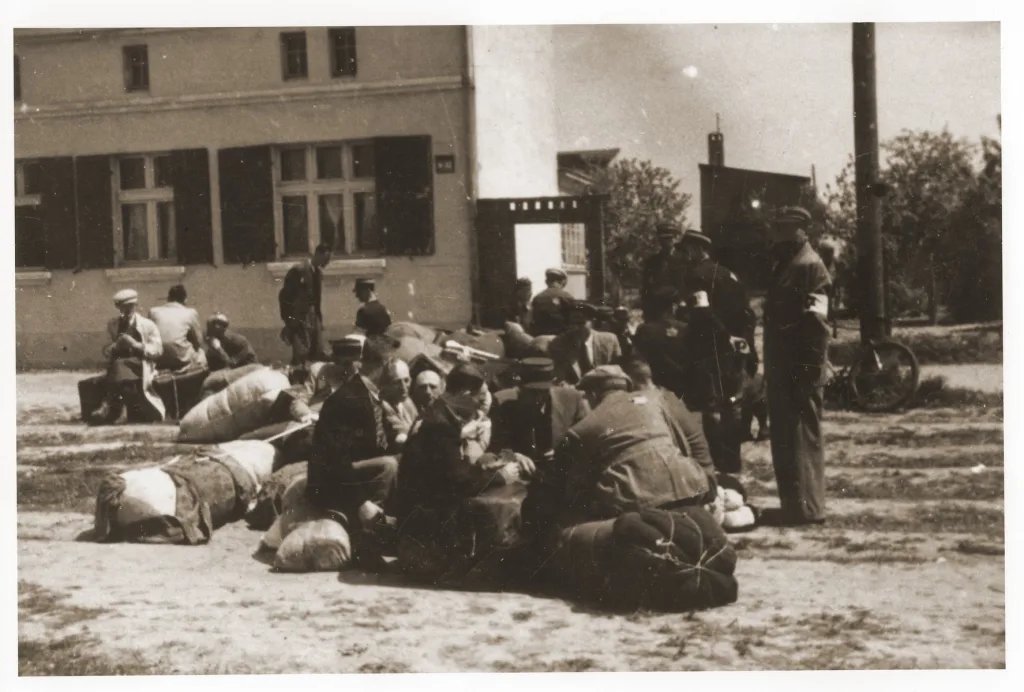
Women and children in the Lodz ghetto on their way to the assembly point for deportations to Chelmno. United States Holocaust Memorial Museum, courtesy of Muzeum Sztuki w Lodzi. Public Domain
Jewish police guard a group of Jews gathered for deportation from the Lodz ghetto. United States Holocaust Memorial Museum, courtesy of Muzeum Sztuki w Lodzi. Public Domain

Concentration camps

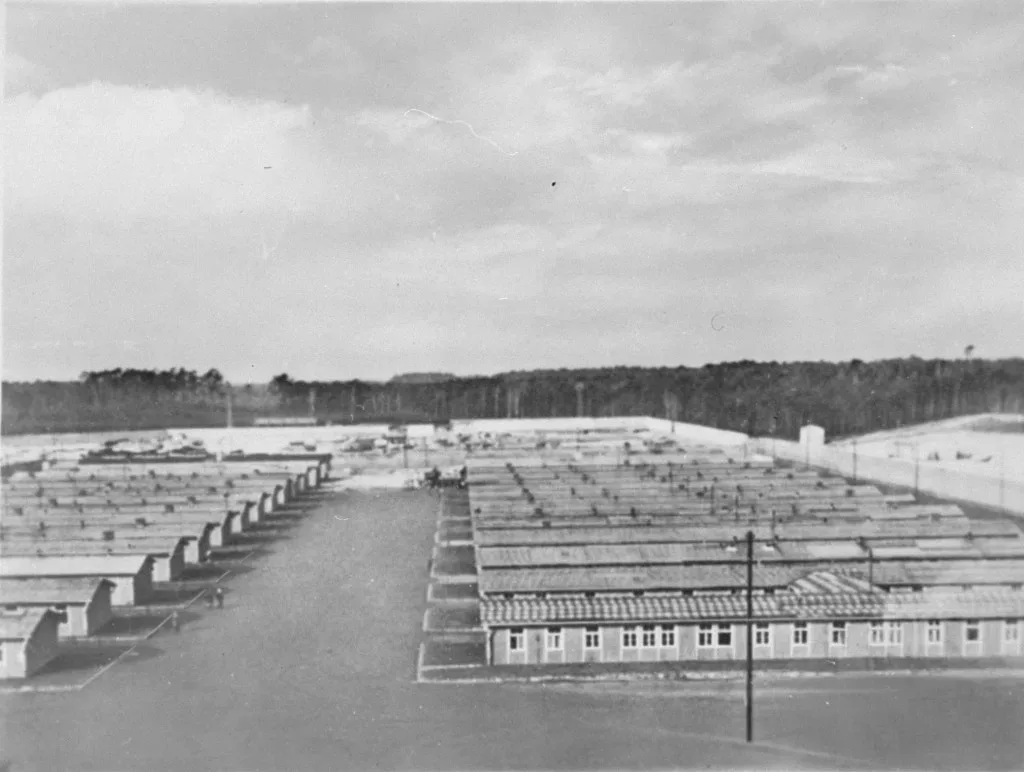
Barracks in Ravensbrück Germany 1939-1945. Photo Archive, United States Holocaust Memorial Museum.
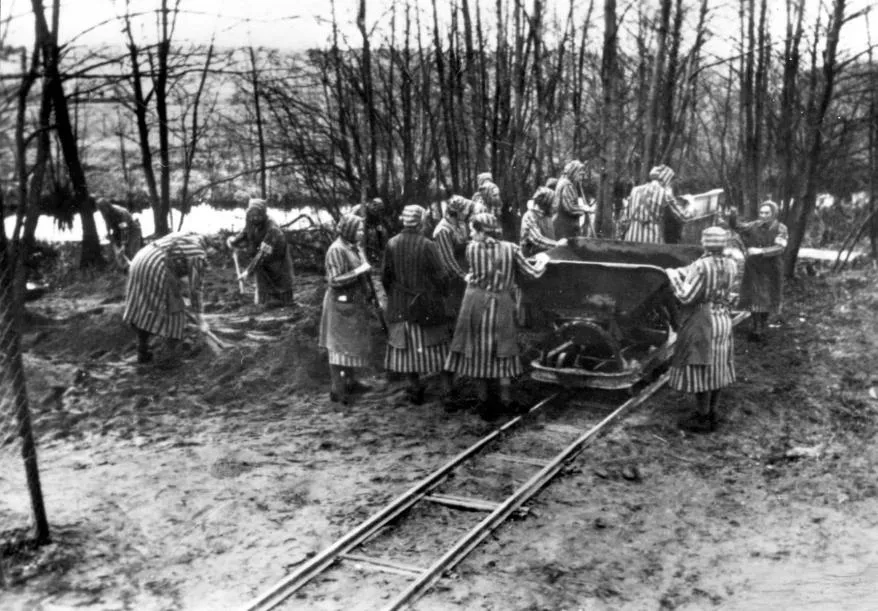
Ravensbrück was a concentration camp located in eastern Germany, the camp was primarily for women and operated from 1939 until it´s liberation in 1945. Approximately 120,000 prisoners from all over Europe passed through the camp and over 90,000 people died.
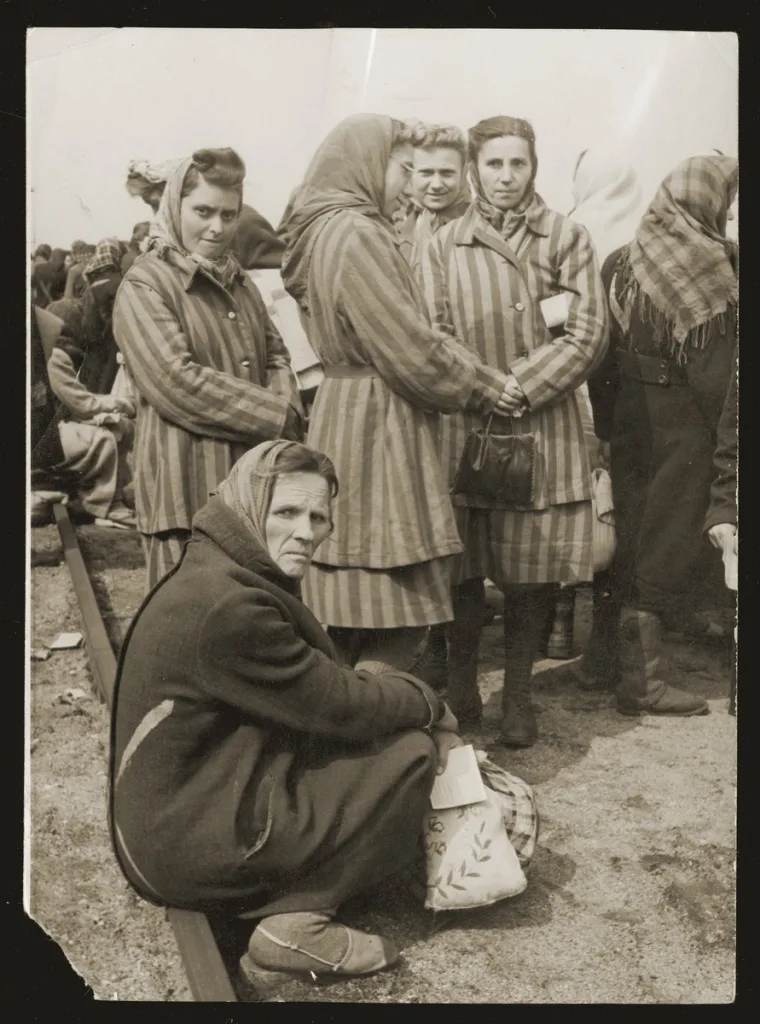
Female Jewish prisoners recently liberated from Ravensbrück. United States Holocaust Memorial Museum, courtesy of Sigmund Baum

Liberation

In 1945, the Germans began evacuating Ravensbrück and Königs Wusterhausen. Several prisoners in Königs Wusterhausen were sent to Sachsenhausen, and most of the prisoners in Ravensbrück were forced on death marches to other camps in Germany. On April 26, 1945, Tobias and his mother were liberated by the Soviet army and they began searching for Tobias' father. Tobias' father, Chaim Sholomo, was in another camp nearby, and after the liberation they were reunited.

Post-war period
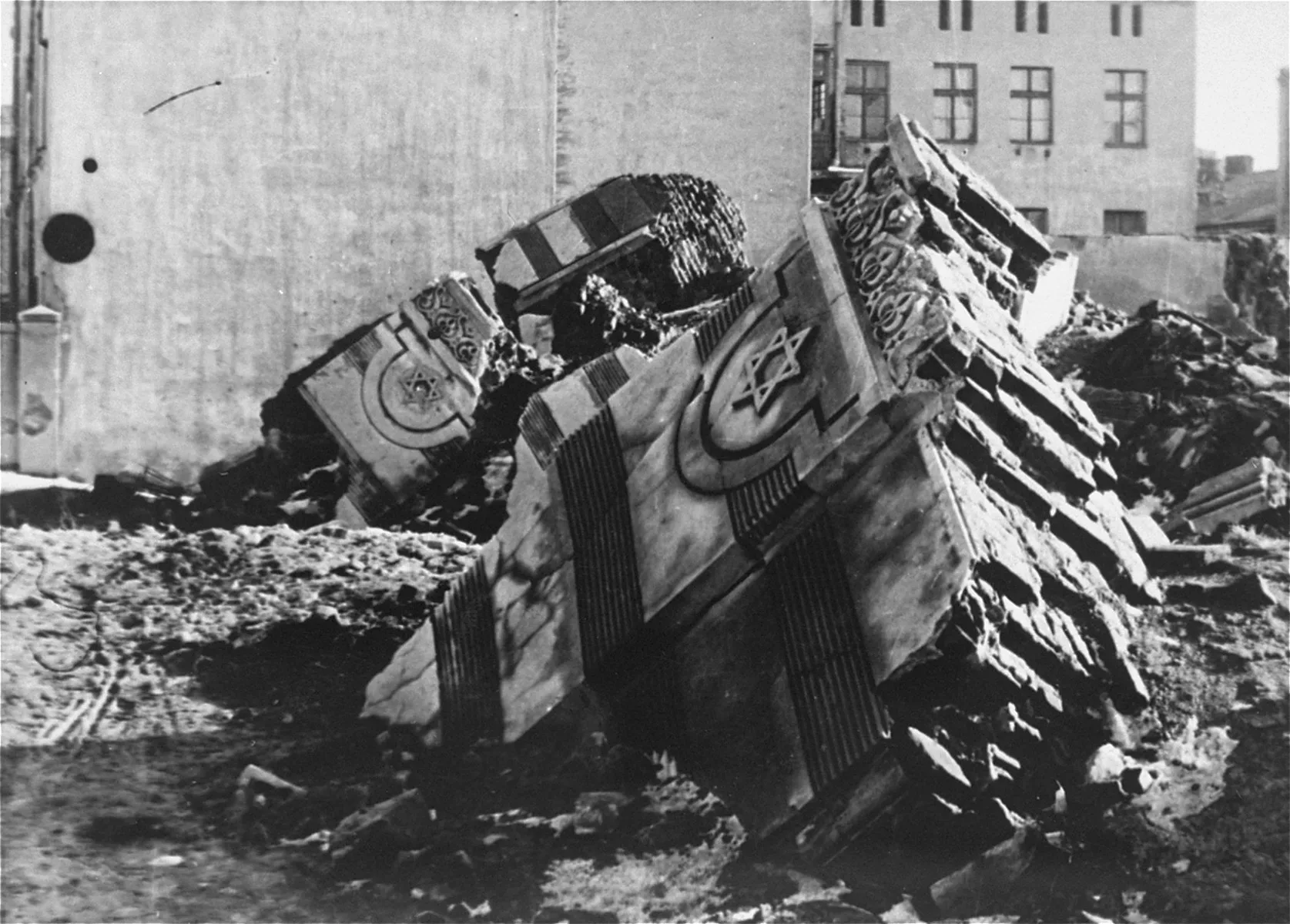
The ruins of a destroyed synagogue on Wolborska Street in Lodz. United States Holocaust Memorial Museum.
When the war ended and the survivors returned to their homes, someone else had often moved in. The people did not expect those who had been forced from their homes to return and many times they refused to return the homes to the original owners when they returned.

Life after the war was difficult in war-torn Poland, which after the war has been given a communist regime.

Tobias and his parents returned to Poland and their old apartment, but now a new family lived there. They were, however, given back some of their belongings by the new owners. Tobias and his parents moved into an apartment nearby.
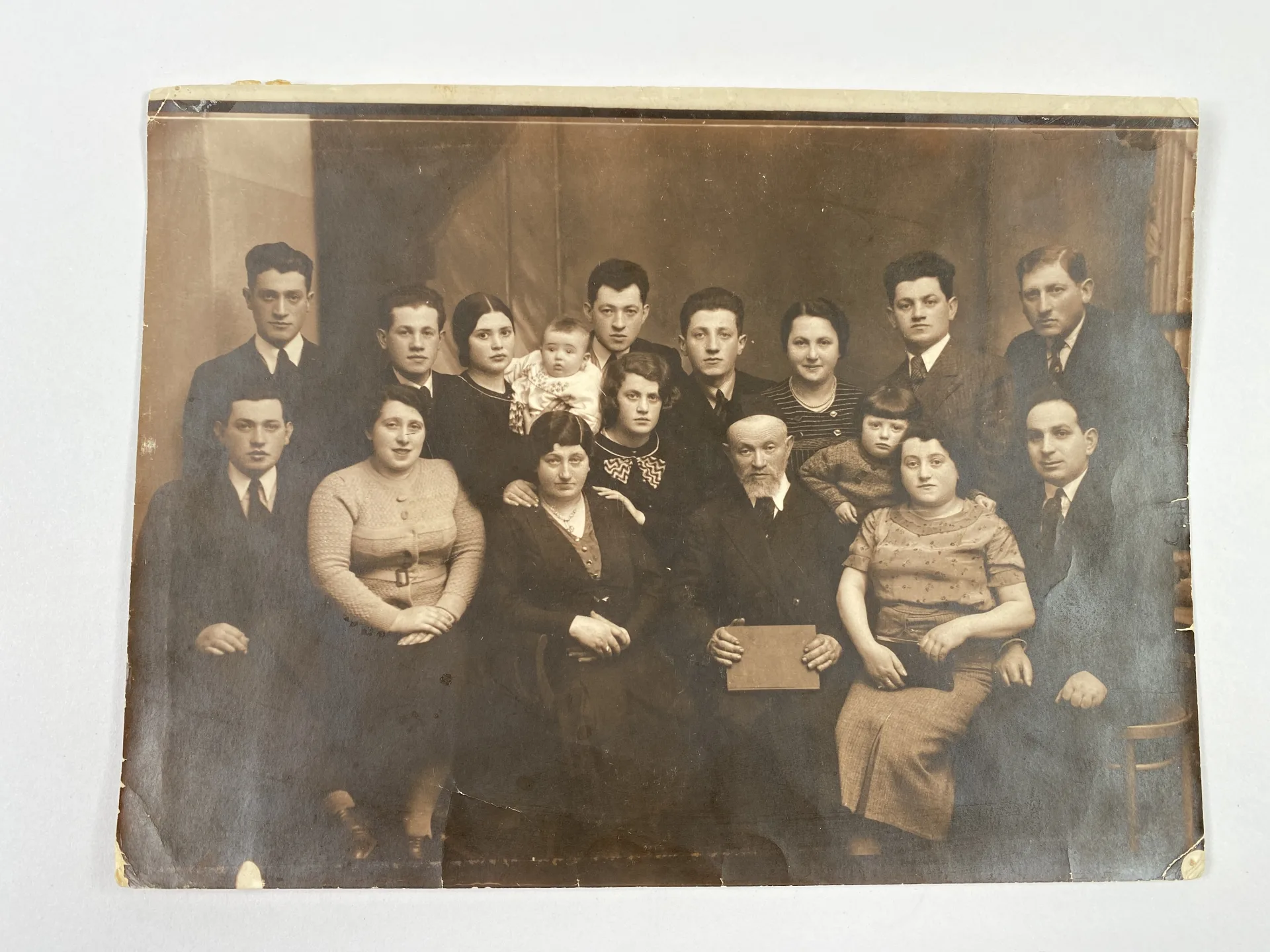
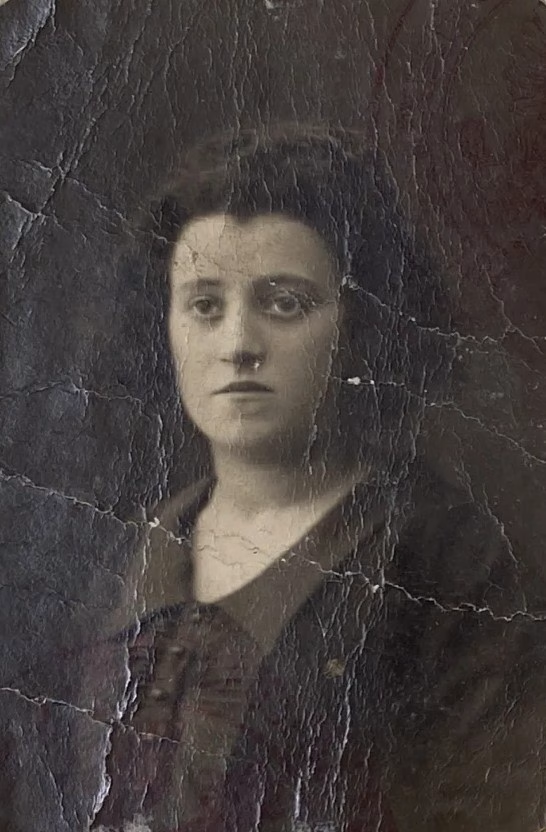
Family photograph, 1938-1939. The photo depicts Tobias' family and relatives in a studio environment. This photograph was probably left in the family's house in Łódź. Swedish Holocaust Museum/SHM.

Photograph of Tobias' mother Estera. The Swedish Holocaust Museum/SHM.

Photograph of Tobias' father Chaim. The Swedish Holocaust Museum/SHM.

Antisemitism

Antisemitism remained in Poland after the war, and there were pogroms, a violent and often coordinated persecution of a group of people. In the city of Kielce, 42 Jews were murdered in a pogrom in the summer of 1946. Antisemitism and persecution meant that thousands of surviving Jews saw no future in Poland and chose to leave. In 1967, the Communist Party in Poland started an anti-semitic campaign in which Jews were portrayed as traitors. This led to the expulsion of almost all remaining Jews from communist Poland.

Tobias moves to Sweden

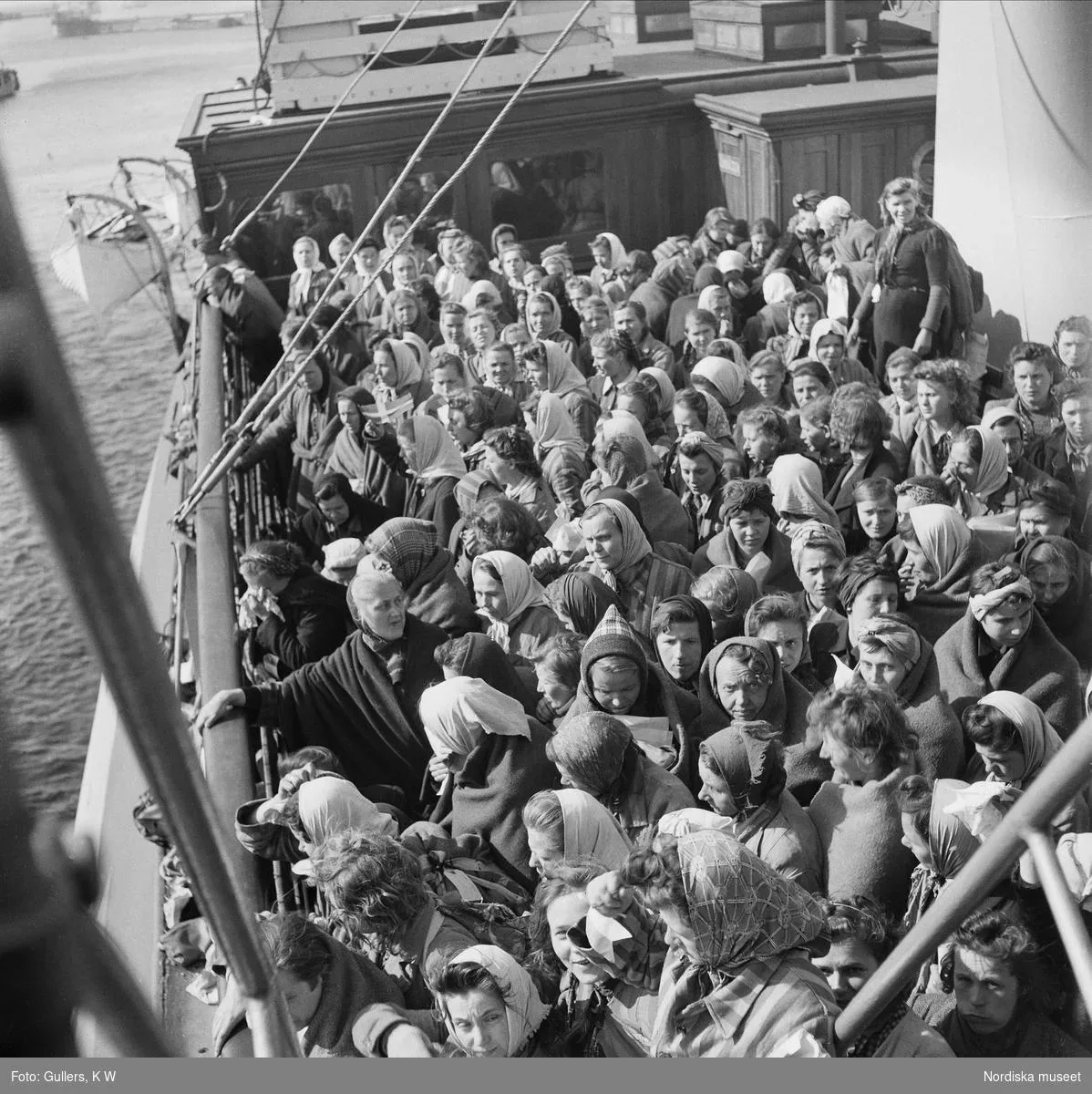
After the end of World War II, the Red Cross organized a rescue mission with the support of the Swedish government. The goal was to bring home survivors from concentration camps. At the site, other victim groups was also given the opportunity to come to Sweden.
Photo: Gullers, K W, CC BY-NC-ND, Nordiska museet

During the summer of 1945, Sweden participates in the UNRRA rescue operation, the so-called White Boats. One of those rescued by the White Boats is Tobias' uncle Moses. Five Swedish ships where used to bring survivors from concentration camps in northern Germany to Sweden. In total, approximately 9,000 survivors come to Sweden with the White Boats.
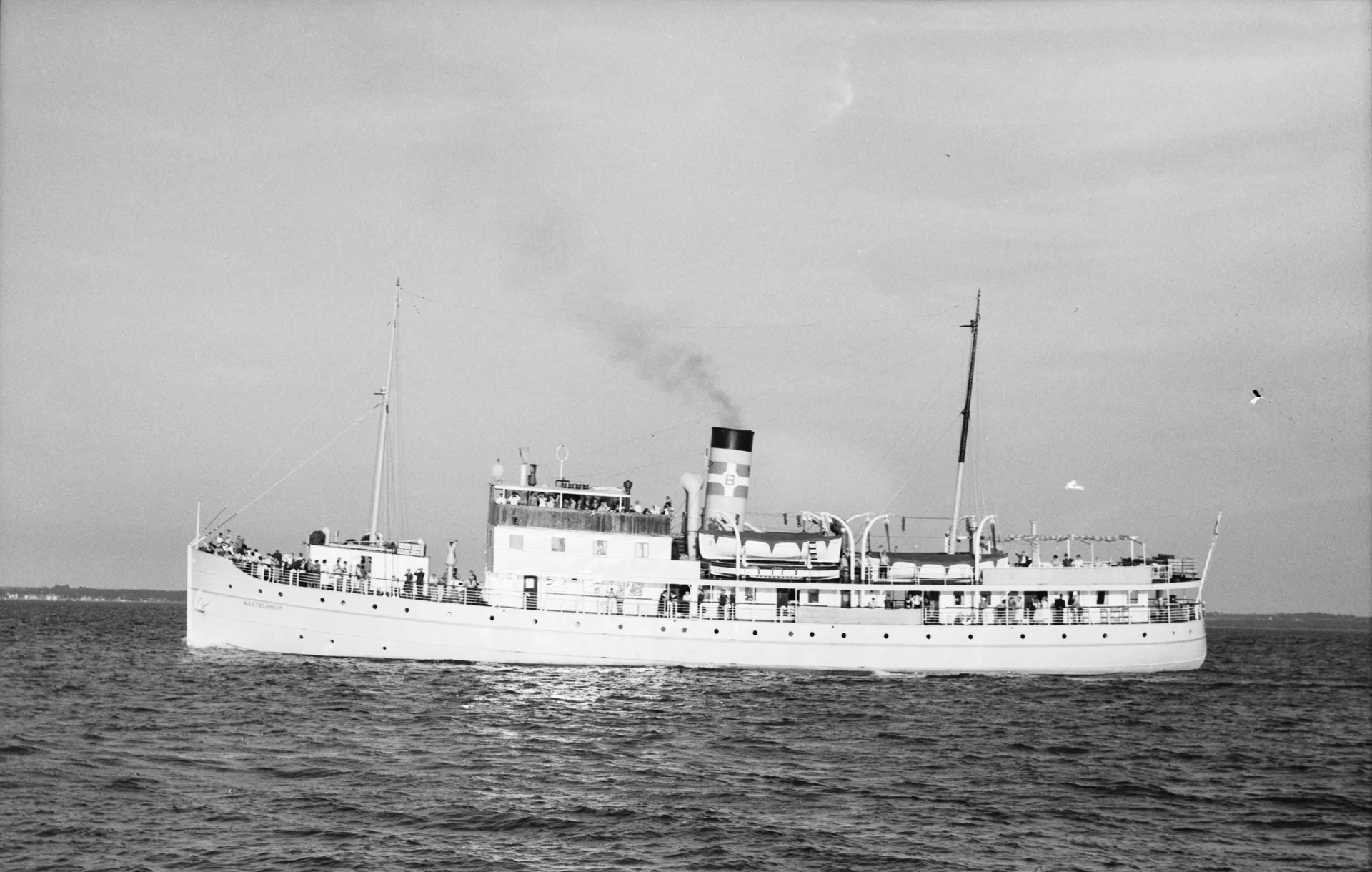
The boat Kastelholm. J. Robert Boman, Sjöhistoriska museet

The fear of being locked up again made Tobias' parents decide to leave Poland in 1948. Tobias and his parents chose to move to Sweden because Tobias' uncle lived there. They came to Sweden by train and moved into an apartment in Stureby, Stockholm. Tobias was twelve years old and quickly made new friends even though he did not speak any Swedish at the time.

Later in life, Tobias graduated in engineering and married his wife Monica Jocton. They had 3 children together. Tobias is still living in Sweden today.