
Support the museum
We carry the memory forward
The Holocaust devastated Jewish life in Europe. Entire communities and families were destroyed. The Nazis also persecuted and murdered Sinti and Roma, homosexuals, people with disabilities, and political opponents. The testimonies of those who survived have become part of our shared history. Now, their voices are falling silent, one by one. It is up to us who remain to carry their stories forward.
A permanent museum makes it possible to preserve knowledge over time and to offer future generations a place for learning, reflection, and dialogue. The Swedish Holocaust Museum has an important role to play, both nationally and internationally. To succeed, it requires commitment beyond public funding. Your contribution, large or small, helps build an institution that stands firm in a time of increasing antisemitism, disinformation, and polarization.
Your support matters
You can support the establishment of a permanent museum at Blasieholmen by making a donation of any amount, please contact the museum. All contributions go to the Swedish Holocaust Museum Foundation and will be used for the establishment of the new museum.

Sweden’s first memorial museum
The museum was established by the Swedish government in 2022 as part of the agency National Historical Museums. In 2023, operations opened in temporary premises on Torsgatan in Stockholm. From the outset, the goal has been to find a permanent and dignified location capable of housing the full scope of the museum’s work.
The vision is to create Sweden’s first memorial museum, an institution that preserves the past while, at the same time, opening space for reflection and dialogue. A safe place for a dark history.
The museum will safeguard Holocaust memory in Sweden through:
- Collecting and preserving testimonies and objects related to the Holocaust
- Creating exhibitions that engage and reach broad audiences
- Developing educational programs for schools across the country
- Contributing to research on the Holocaust
Together, we can create a permanent museum of high international standard that is firmly rooted in a Swedish context – one that deepens understanding of the Holocaust through personal stories, objects, and multiple perspectives.
The Swedish Holocaust Museum is a memorial museum. In addition to telling the history and educating about the crimes of the Nazis, we are also a safe place for a dark history – a place where people are welcomed for remembrance and reflection.
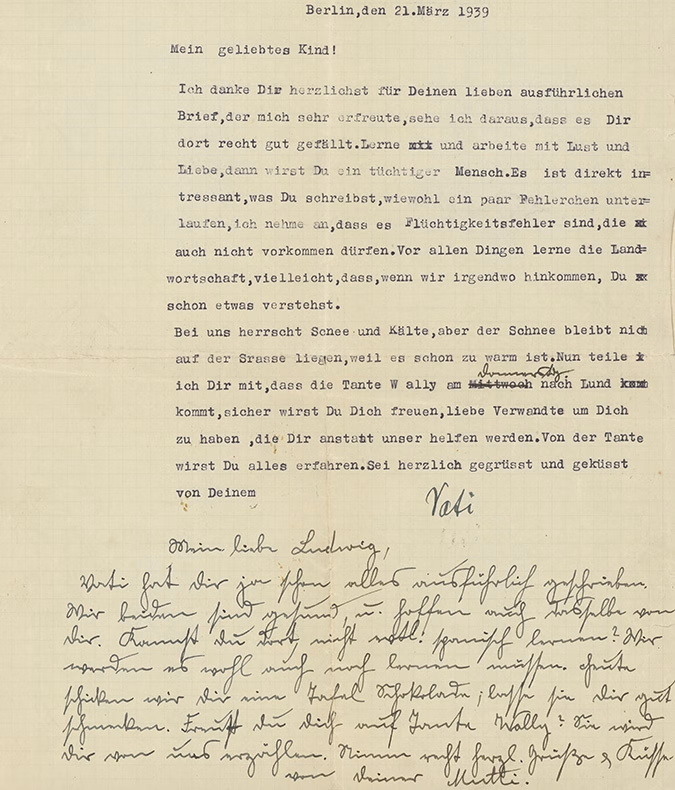
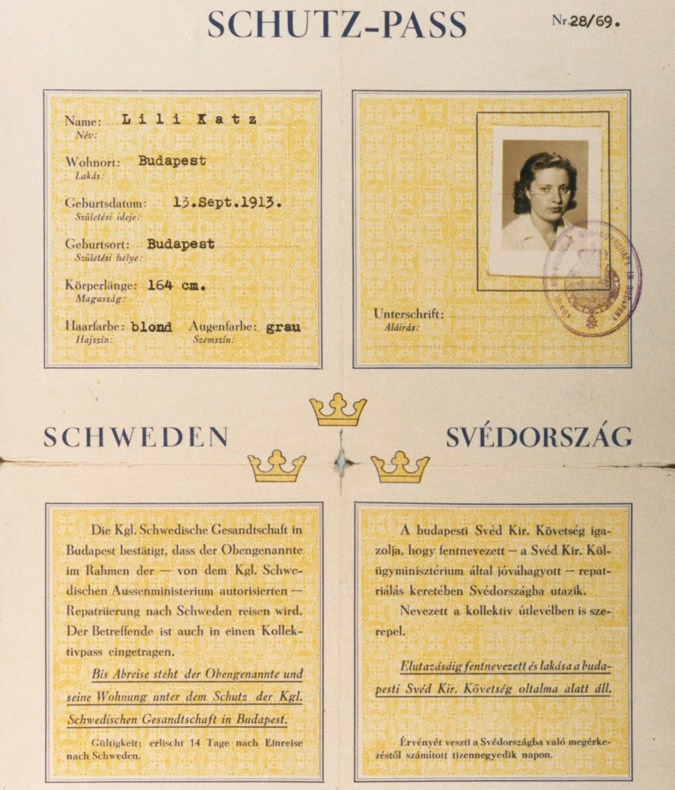
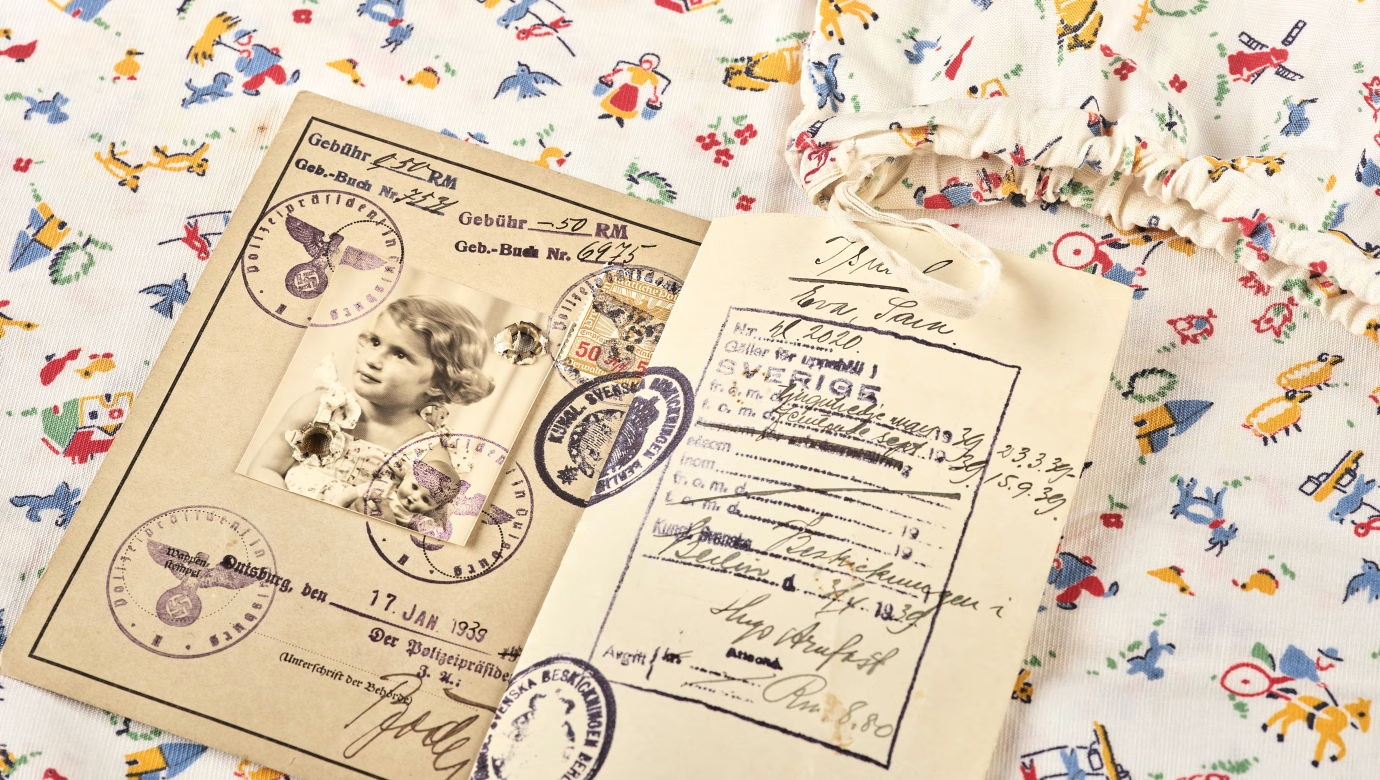
A symbolic site in central Stockholm
The museum will be permanently established on Blasieholmen in the historic Customs House. The location, right in the heart of Stockholm, holds strong symbolic and geographical significance. A stone’s throw away lie the Great Synagogue of Stockholm, the Holocaust Memorial, and Raoul Wallenberg Square. During the Second World War, the adjacent Lydmar Hotel building housed the Nazi German legation. All of this makes Blasieholmen both an authentic site and a natural home for Sweden’s Holocaust museum.
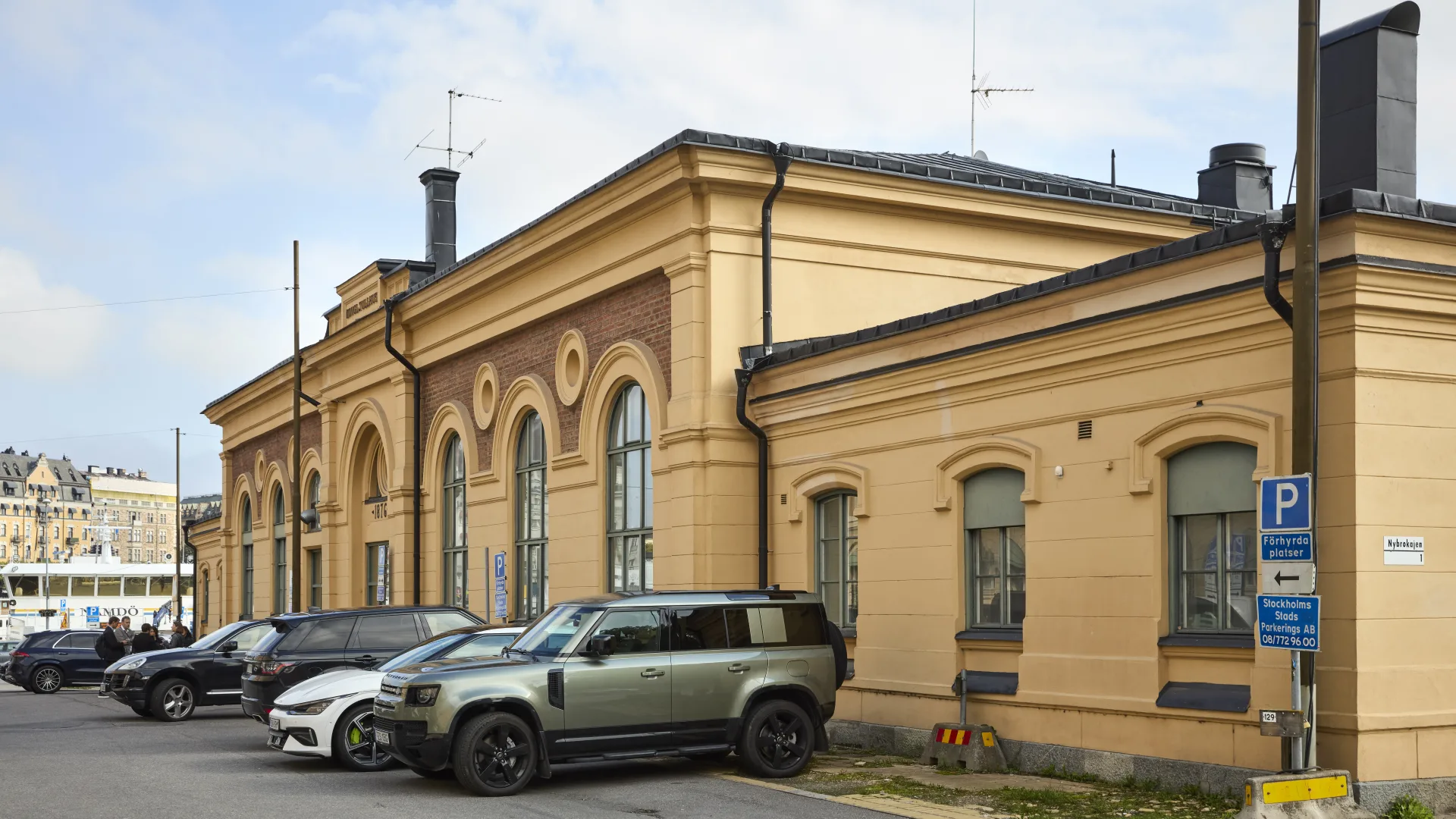
At Blasieholmen, the museum will become part of a wider cultural district, in close proximity to Sweden’s democratic institutions.
Do you have any questions?
We are pleased to provide further information about the project and opportunities for involvement.
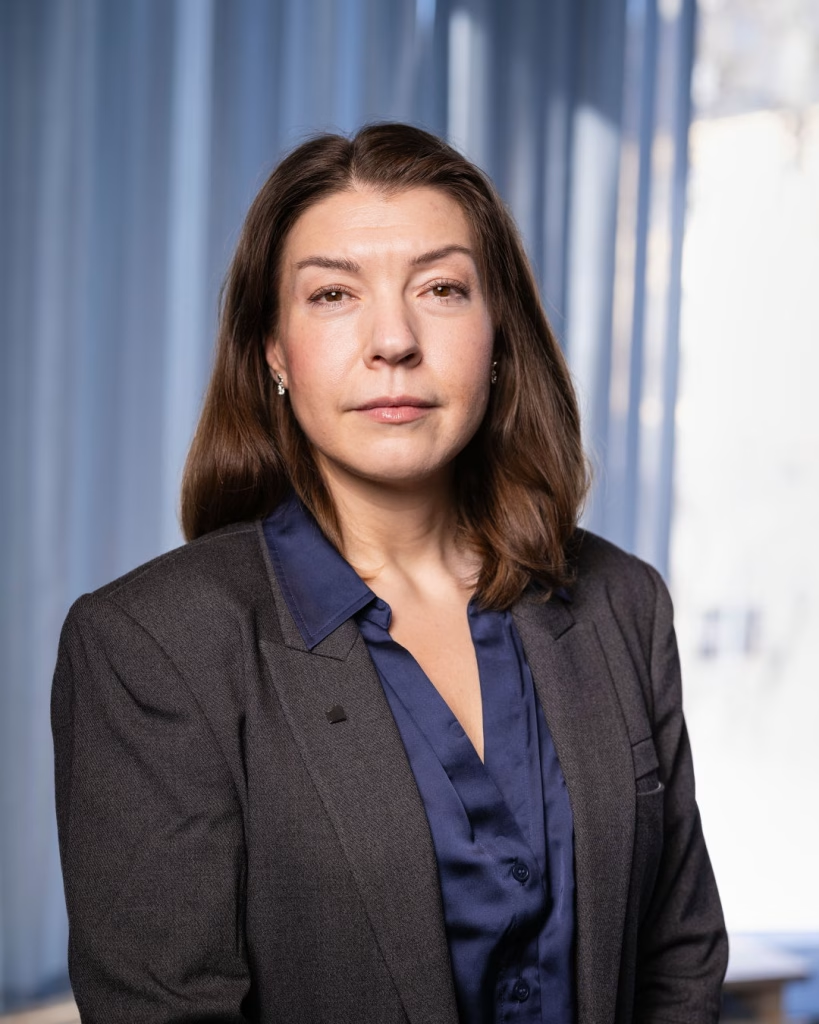
Emy Widén
+46 721 427 090
emy.widen@shm.se
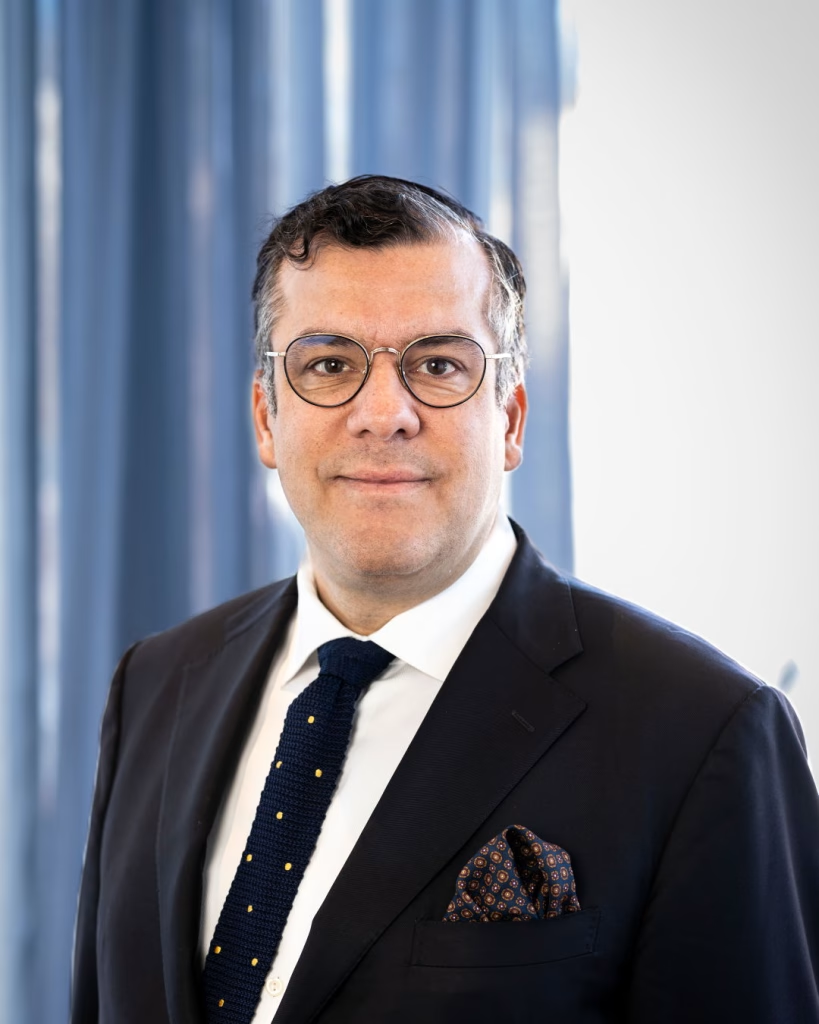
Vincent Hashmi
+46 709 849 566
chair.vincent@shm.se
FAQ: Donations and the new museum
The collected funds go to the Swedish Holocaust Museum Foundation. The foundation’s main task is to enable a permanent museum for The Swedish Holocaust Museum with suitable premises and high architectural quality. Once this is in place, the funds can also be used to develop and strengthen the museum’s activities, such as exhibitions and education.
The Swedish Holocaust Museum is mainly funded through government resources. However, in order to establish and develop a permanent museum with high international quality and suitable facilities in the long term, additional sources of funding are needed. Donations help make this possible while keeping rent at a reasonable level, strengthening the conditions for a sustainable operation over time.
Yes. Please contact us and we will provide information about international payments and current bank details.
Yes. If you wish to remain anonymous, you can indicate this when making your donation or contact us directly.
The goal is to open on Blasieholmen in central Stockholm around 2030. The process is influenced by a range of factors such as detailed planning work and dialogue with various stakeholders. The work is carried out in close collaboration with City of Stockholm. More information about the opening date will be published continuously on the museum’s website.
If you have questions about the fundraising, you are warmly welcome to contact us via email or phone:
Emy Widén
Business development
Email: emy.widen@shm.se
Telephone: +46 721 427 090
Vincent Hashmi
Chair of the Financial Advisory Board
Email: chair.vincent@shm.se
Telephone: +46 709 849 566
The people featured in the header image
From left, top row: Georg Witt with his cousin, Monica and Susanne Rothschild, Ada Becker, Halina, Ania and Alexander Berensztajn, Marion Loewe with her parents Artur and Angelika, and Sofia Taikon.
Photo: Swedish Holocaust Museum/SHM