Cecilia’s sewing box

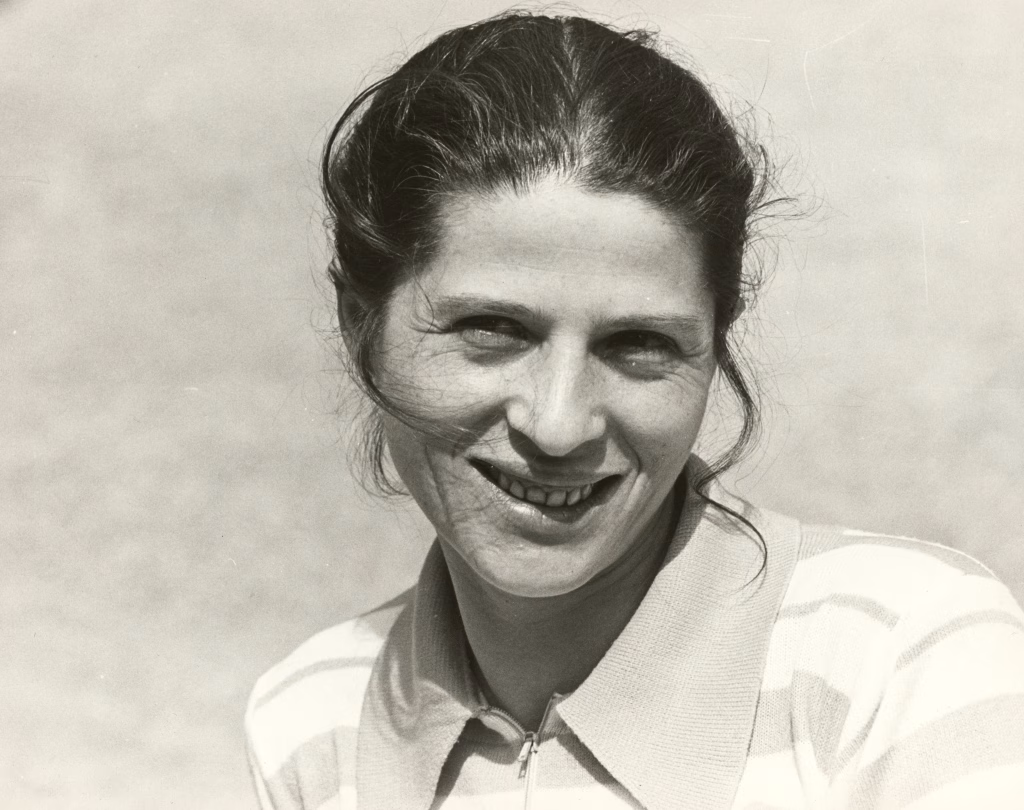
On July 7, 1945, one of the White boats arrived in Sweden: the ship M/S Kronprinsessan Ingrid. On board­­­ were Cecilia Czilli Mendelovitz and her sister Magda.­­­­ The Mendelovitz sisters grew up in the town of Farkasrév,­­­ today’s Vadu Izei in Romania. During the war, Cecilia­­­ was in Buchenwald, Auschwitz and Bergen-­Belsen concentration camps.
M/S Kronprinsessan Ingrid. Göteborg-fredrikshavn. A.-B. Göteborgs Konstförlag. PDM. Föremålsnummer 3226987. Bild ur Gärd Philips album från arbetet i Lübeck sommaren 1945.
The ship M/S Kronprinsessan Ingrid. Photo: Object number 3226987. Photograph from Gärd Philip’s album documenting the work in Lübeck in the summer of 1945.

Among Cecilia’s few belongings was this small tin box marked ”emergency ration”. These boxes were given to British soldiers and contained a high-calorie chocolate. The chocolate was only allowed to be eat­en in extreme emergencies on orders from a superior officer. But when the concentration camps were liberat­ed, many soldiers chose to give their chocolate to starving camp prison­­­ers. Cecilia probably received the box from a soldier at the liberation of Bergen-­Belsen on April 15, 1945.

Small tin box marked ”emergency ration.
Photo: The Swedish Holocaust Museum (CC BY 4.0)
A tin box containing spools of thread, needles, and other sewing accessories.
Photo: Ola Myrin, The Swedish Holocaust Museum/SHM (CC BY 4.0)

After the war Cecilia worked as a seamstress and the small tin box became a practical storage place for extra spools of thread, needles and other sewing accessories.­­­­ Her children did not know the history of the box. It was only after Cecilia’s death in 2006 that they discovered the inscription on the box. The family decided to donate the box to the Swedish Holocaust Museum. The object is part of the museum’s collection.
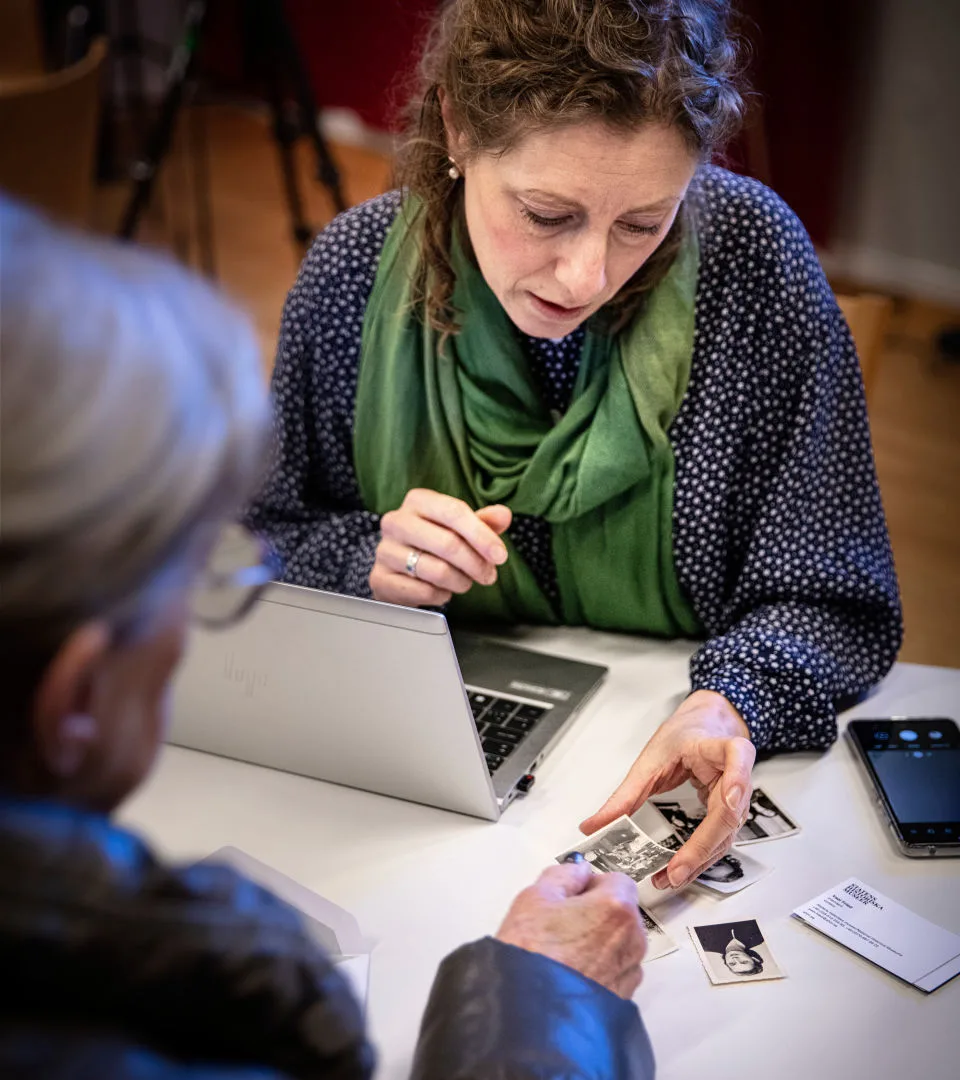
Donate to the collections

Do you or a relative have a personal story connected to the Holocaust that you would like the museum to preserve? Please get in touch.

Museum staff looking at photographs together with a donor.
Photo: Jens Mohr, The Swedish Holocaust Museum/SHM

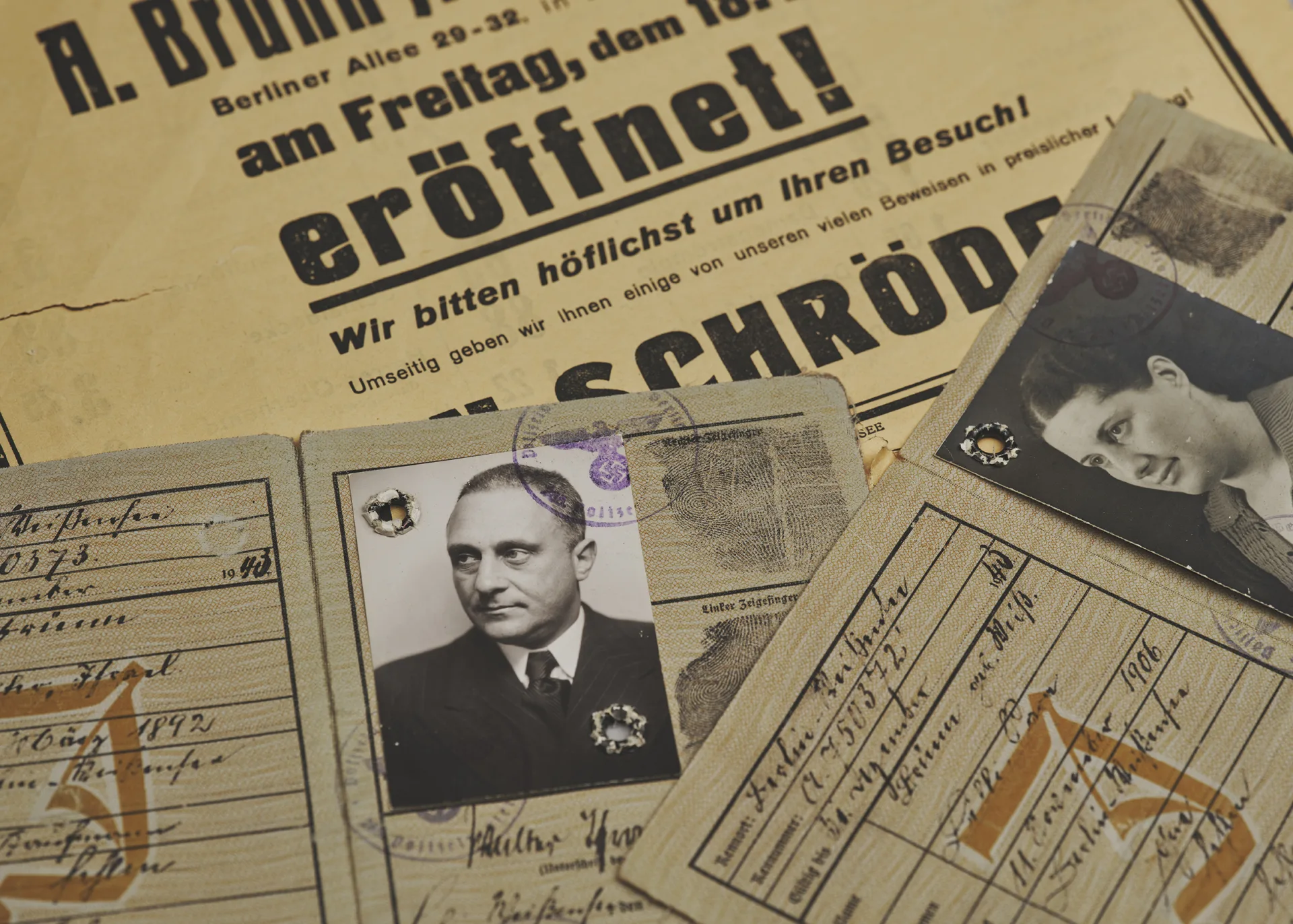
Explore the collections

The Swedish Holocaust Museum collects and preserves materials that can tell the story of Sweden and the Holocaust. Since the museum was founded in 2022, approximately 10,000 objects and archival items have been collected, and the collection continues to grow.

Detail of Walter Brünn's passports and other documents.
Photo: Ola Myrin, The Swedish Holocaust Museum/SHM